 LittleLearners
Tricky Words: Phases 2 & 3
20 must-know tricky words — trace, read, write
Overview
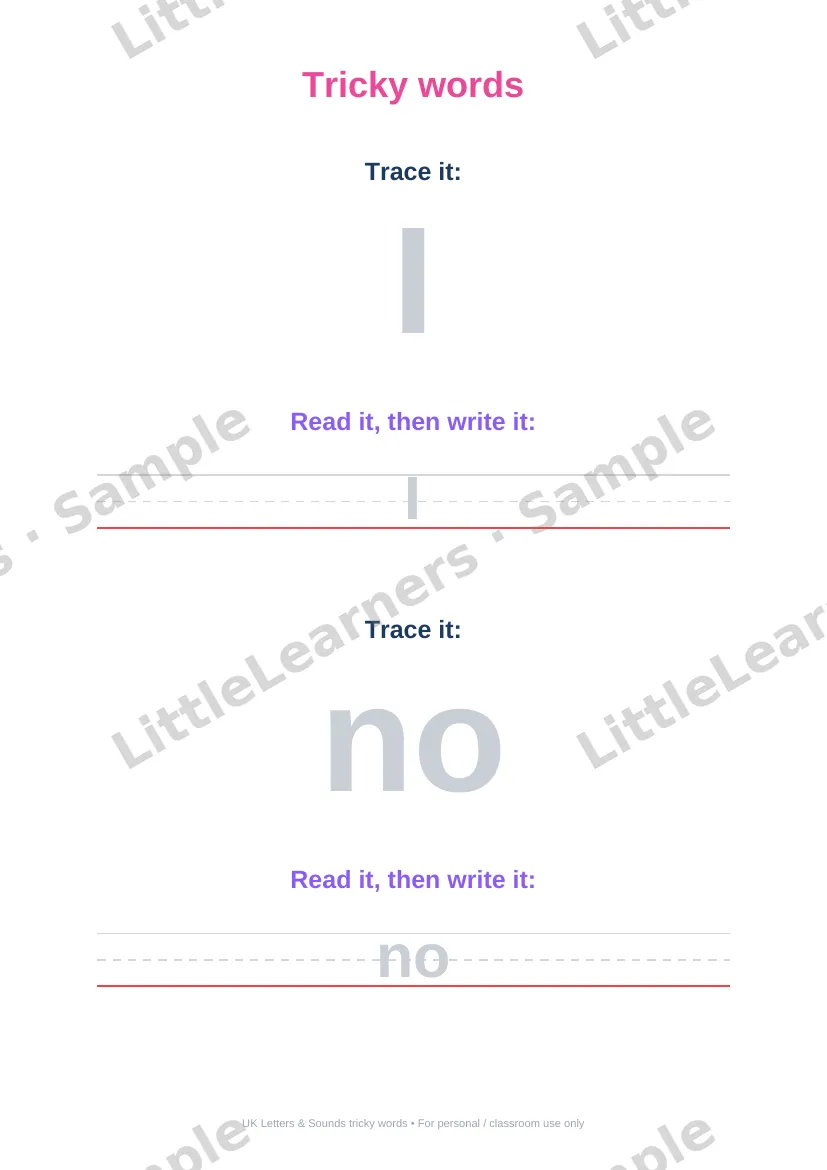
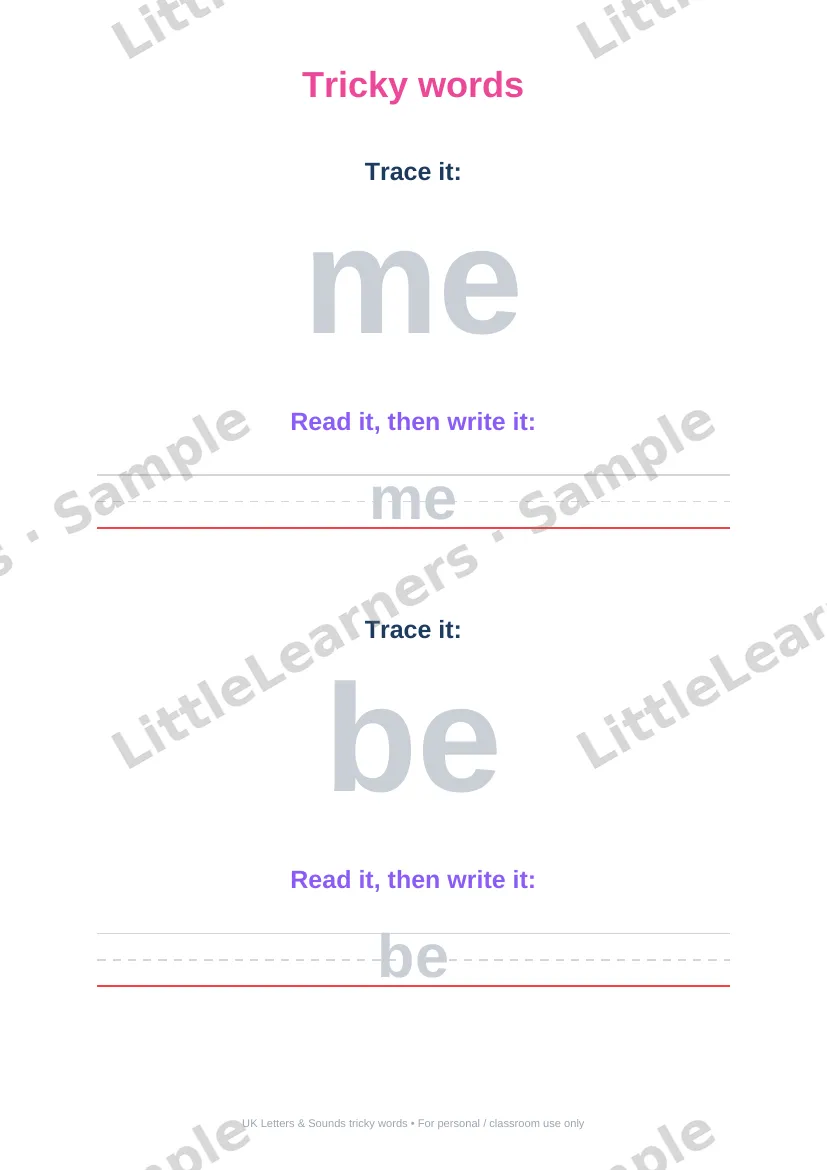
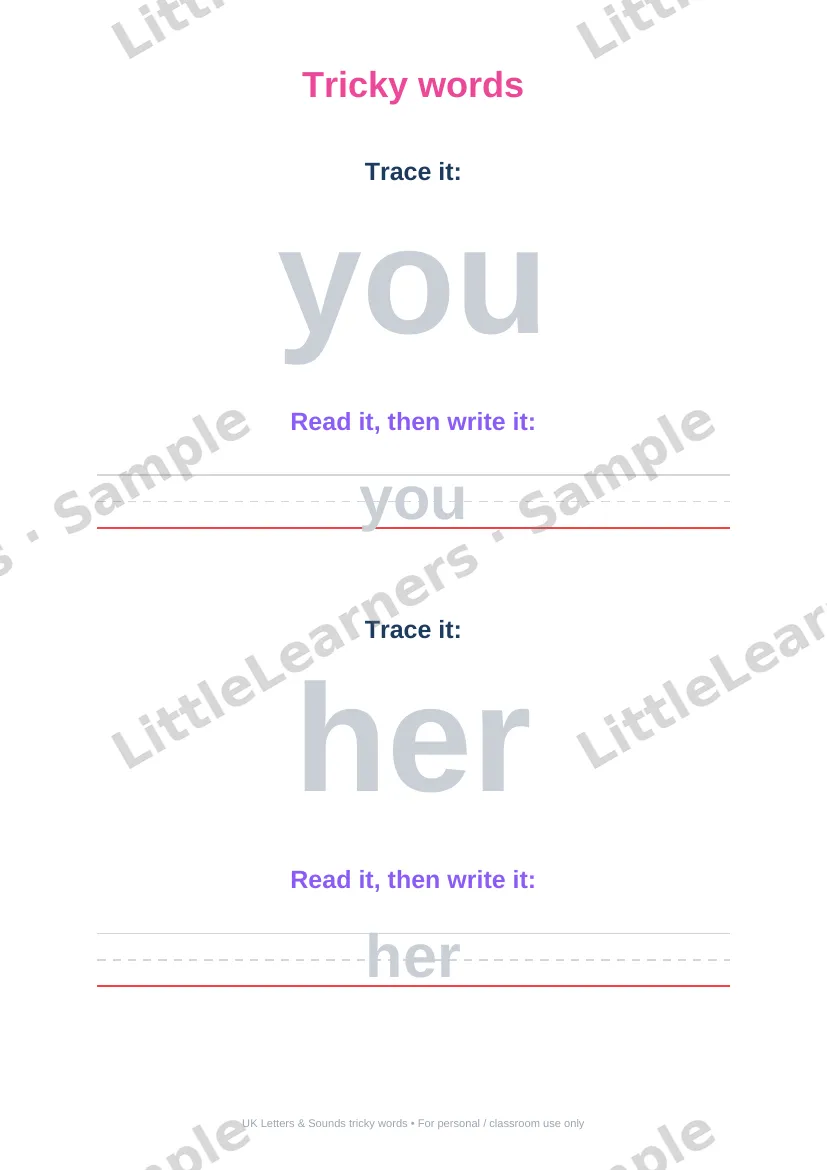
The words that can't be sounded out: the, to, I, no, go, she, was, they, said, have and more.
Two words per page — trace it, read it, then write it yourself.
Matches the Letters & Sounds tricky word lists used in UK schools.
Is this the right pack for your child?
For 4–6 year olds bringing home reading books — the words that make them stall mid-sentence (the, was, said). Use alongside the Phonics Phase 2 pack, not instead of it: phonics teaches the sounds, this pack teaches the rule-breakers.
Torn between packs? still learning the sounds themselves? Start with Phase 2.
What's inside
- The words that can't be sounded out: the, to, I, no, go, she, was, they, said, have and more
- Two words per page — trace it, read it, then write it yourself
- Matches the Letters & Sounds tricky word lists used in UK schools
How to use this pack at home
- Learn the look-say-cover-write-check routine: look, say it, cover, write from memory, check.
- Two new words a week is plenty — old ones go on the fridge for spotting.
- Play 'tricky word hunt': sticky notes hidden around the house to find and read.
- Never ask them to sound these out — that's exactly what makes them tricky.
Details
File details
11-page print-ready A4 PDF. Prints best on regular A4 paper from any home printer.
Licence
Unlimited personal and classroom printing is included. Please don't resell or redistribute the files.
Download & printing
Click Download Free and the PDF downloads straight away — no sign-up needed. Print at home or at a print shop — laminate favourites for reuse with dry-wipe pens.
Complete the collection
All packs — FREE
241 pages total. Free forever. Download, print, enjoy — no sign-up, no payment.
Get the bundle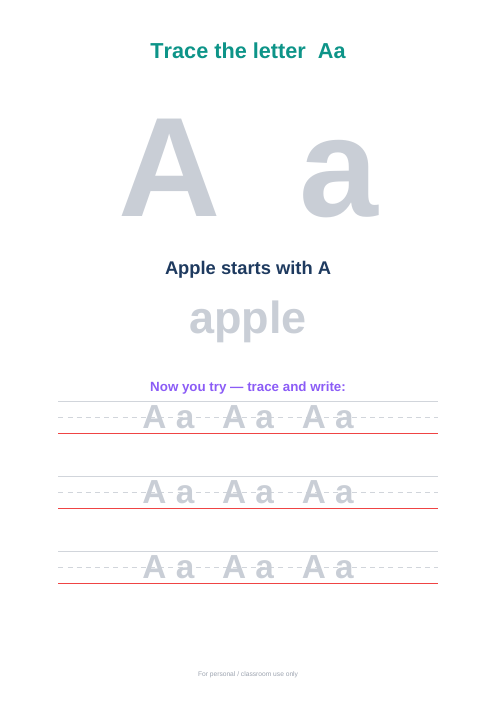
You may also like
Parents also read
What Is Phonics Phase 2? (UK)
Phase 2 phonics explained for UK parents: what children learn in Reception, when it's taught, the full phase timeline and 5 things to do at home.
Tricky Words Phases 2–3: Full List & Tips
All the Phase 2 and 3 tricky words from Letters & Sounds, plus practical ways to help your child learn the words that can't be sounded out.
Segmenting vs Blending Explained
Segmenting vs blending finally made clear: blending merges sounds to read words, segmenting splits words into sounds to spell them — plus games that teach each skill.